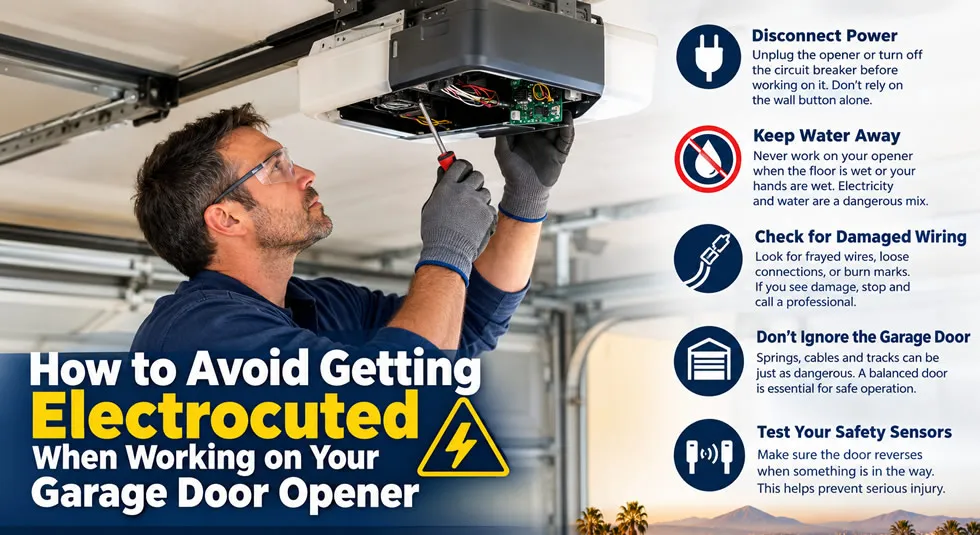
How to Avoid Getting Electrocuted When Working on Your Garage Door Opener
Working on a garage door opener may look like a simple DIY project. However, your garage door opener contains electrical components that can cause serious injury if handled incorrectly. Whether you live in Anaheim, Orange, Irvine, Santa Ana, Huntington Beach, Costa Mesa, or anywhere else in Orange County, CA, taking the proper precautions is essential before attempting any garage door opener repair.
At Day & Nite Doors, we understand that homeowners sometimes want to troubleshoot a noisy, malfunctioning, or non-working opener themselves. Nevertheless, knowing when to stop and call a professional Orange County garage door repair company can help prevent electrical shock, injury, and expensive damage to the opener.
Always Disconnect Power First
The most important rule when working around a garage door opener is simple: disconnect the electrical power before opening the opener housing or working on its electrical components.
Do not assume that turning off the wall-mounted garage door opener button is enough. The opener can still be connected to electrical power even when the wall control is turned off.
Before performing electrical work, unplug the garage door opener from its electrical outlet. If the opener is hardwired into the electrical system, the appropriate circuit breaker should be switched off. If you are unsure which breaker controls the opener, this is a good reason to stop and contact a qualified professional.
The Consumer Product Safety Commission requires automatic residential garage door operators to meet federal safety standards, and manufacturer instructions emphasize following proper installation and safety procedures.
Never Work on an Opener Around Water
Electricity and water are an extremely dangerous combination. This is particularly important in Orange County garages, where homeowners may use hoses, pressure washers, or other equipment around the garage.
If the floor is wet, there is standing water near the opener, or your hands are wet, do not work on the garage door opener.
Likewise, never attempt electrical repairs while standing on a wet concrete garage floor. Allow the area to completely dry first, or have a professional inspect the system.
Don’t Remove the Cover While the Opener Is Powered
Many garage door openers have electrical connections, circuit boards, capacitors, wiring, and other components inside the housing. Even after unplugging the opener, certain components may require additional precautions.
For this reason, homeowners should avoid touching internal electrical components unless they understand the equipment and proper electrical safety procedures.
If your garage door opener is not working, the problem may be something simple such as a remote-control issue, sensor problem, damaged wiring, or power interruption. However, diagnosing electrical components inside the opener can be considerably more dangerous.
Watch for Damaged Wiring
Inspecting visible wiring can sometimes help identify a problem. Look for frayed wires, damaged insulation, loose connections, burn marks, or wires that appear to have been chewed or pulled loose.
However, don’t touch questionable wiring while the opener is connected to power.
If you see exposed electrical wiring, sparks, smoke, a burning smell, or signs of overheating, disconnect power if it can be done safely and contact a professional garage door repair technician in Orange County.
Don’t Forget the Garage Door Itself
Electrical safety isn’t the only concern when repairing a garage door opener. The garage door is a large, heavy moving system containing springs, cables, rollers, tracks, and other hardware.
The CPSC advises that improperly balanced doors can create serious hazards and recommends professional service for repairs involving springs, cables, and related hardware.
Therefore, never assume that an opener problem is simply an electrical problem. A damaged spring or improperly balanced door can place tremendous stress on the opener.
Test Your Safety Sensors
After any garage door opener work, the garage door safety sensors should be checked. These sensors are designed to help prevent the door from closing when something is in its path.
The CPSC states that modern automatic residential garage door operators are subject to mandatory safety requirements, including entrapment protection.
If your door does not reverse properly when the safety system is tested, don’t continue using it until the problem has been corrected.
When to Call a Garage Door Professional in Orange County
If you’re uncomfortable working with electricity, don’t take chances. Garage door opener repair is often best left to an experienced technician, particularly when the problem involves internal wiring, circuit boards, electrical connections, or other components inside the opener.
Day & Nite Doors provides garage door repair and garage door opener service throughout Orange County, including communities such as Anaheim, Fullerton, Brea, Orange, Yorba Linda, Garden Grove, Westminster, Huntington Beach, Irvine, Tustin, Santa Ana, Costa Mesa, Newport Beach, Mission Viejo, and surrounding Orange County communities.
When your garage door opener stops working, making unusual noises, operates intermittently, or shows signs of an electrical problem, professional diagnosis can help identify the actual cause without putting you at unnecessary risk.
Stay Safe With Your Garage Door Opener
The best way to avoid getting electrocuted while working on a garage door opener is to treat the opener like any other electrical appliance. Disconnect power before servicing, keep water away from electrical components, avoid touching damaged wiring, and don’t remove electrical covers unless you know exactly what you are doing.
Most importantly, remember that a garage door combines electricity, heavy moving equipment, springs, cables, and mechanical components. When you’re uncertain about a repair, calling an experienced Orange County garage door repair professional is a safer choice than attempting a potentially dangerous DIY repair.